About
Chocolate
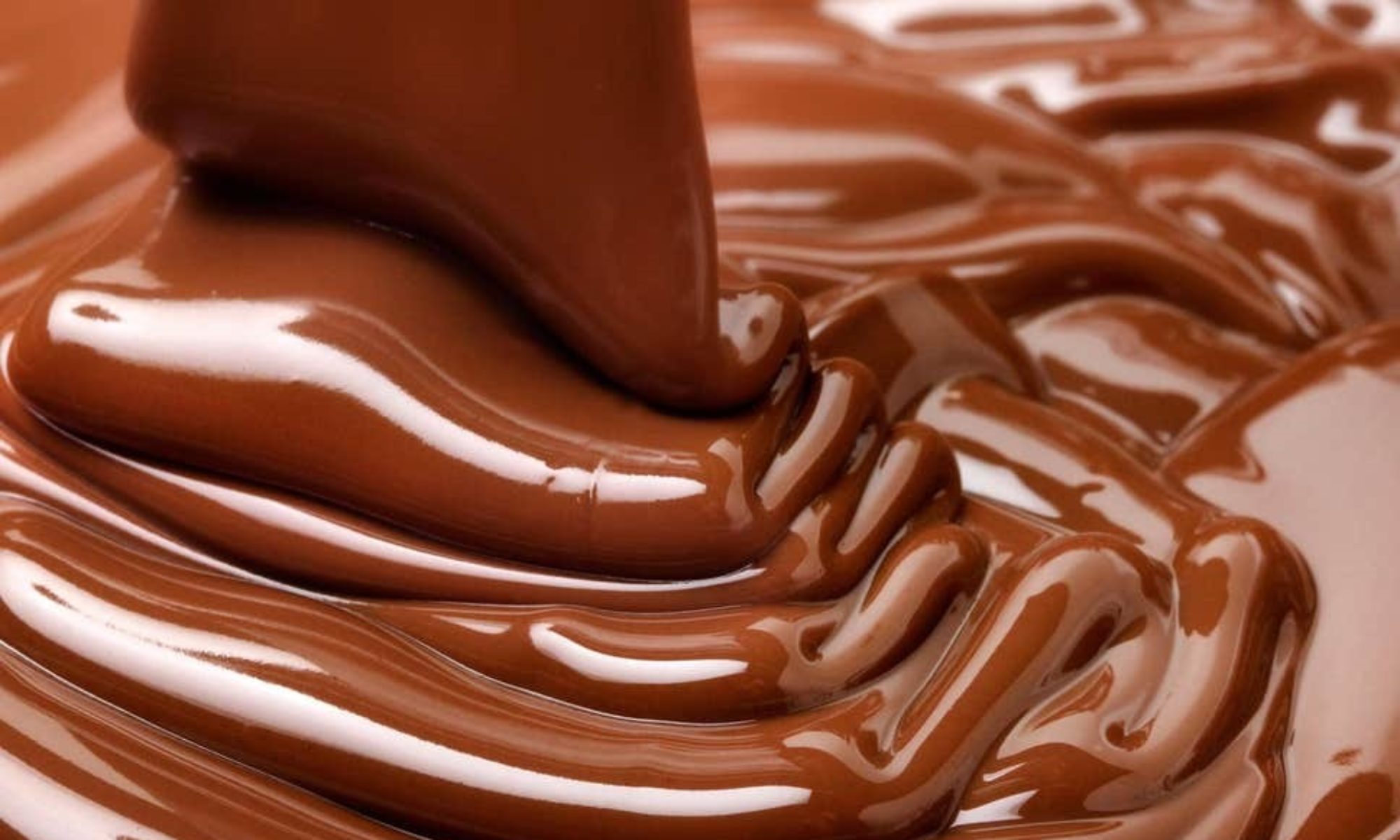
Part of the pleasure of
eating chocolate is due to the fact that its melting point is slightly below
human body temperature: it melts in the mouth. Chocolate intake has been linked
with release of serotonin in the brain, which is thought to produce feelings of
pleasure.
Chocolate comprises a
number of raw and processed foods that originate from the seed of the tropical
cacao tree. It is a common ingredient in many kinds of confections such as
chocolate bars, candy, ice cream, cookies, cakes, pies, chocolate mousse, and
other desserts. It is one of the most popular (or at least recognizable)
flavors in the world.
Chocolate was created by the Mesoamerican civilization, from cacao beans, and
cultivated by pre-Columbian civilizations such as the Maya and Aztec, who used
it as a basic component in a variety of sauces and beverages. The cocoa beans
were ground and mixed with water to produce a variety of beverages, both sweet
and bitter, which were reserved for only the highest noblemen and clerics of the
Mesoamerican world. Chocolate is made from the fermented, roasted, and ground
beans taken from the pod of the tropical cacao tree, Theobroma cacao, which was
native to Central America and Mexico, but is now cultivated throughout the
tropics. The beans have an intensely flavored bitter taste. The resulting
products are known as "chocolate" or, in some parts of the world, cocoa.
Today, chocolate commonly refers to bars made from the combination of cocoa
solids, fat, sugar and other ingredients. Chocolate is often produced as small
molded forms in the shape of squares, animals, people, or inanimate objects to
celebrate festivals worldwide. For example, there are moulds of rabbits or eggs
for Easter, coins for Hanukkah, Saint Nicholas (Santa Claus) for Christmas, and
hearts for Valentine's Day.
Chocolate can also be made into drinks (called cocoa and hot chocolate), as
originated by the Aztecs and the Mayas. In England, Samuel Pepys records in his
diaries at least two entries relating to "jocolatte" as early as the 1660s.
Later, in 1689 Hans Sloane developed a milk chocolate drink in Jamaica which was
initially used by apothecaries, but later sold by the Cadbury brothers.
The word "chocolate" comes from the Nahuatl language of the Aztecs of Mexico.
The word is derived from the Nahuatl word xocolatl, which is a combination of
the words, xocolli, meaning "bitter", and atl, which is "water". It is
associated with the Mayan god of Fertility. Mexican philologist Ignacio Davila
Garibi, proposed that "Spaniards had coined the word by taking the Maya word
chocol and then replacing the Maya term for water, haa, with the Aztec one, atl."
However, it is more likely that the Aztecs themselves coined the term, having
long adopted into the Nahuatl the Mayan word for the "cacao" bean; the Spanish
had little contact with the Mayans before Cortés's early reports to the Spanish
King of the beverage known as xocolatl.
The chocolate residue found in an ancient Maya pot suggests that Mayans were
drinking chocolate 2,600 years ago, which is the earliest record of cacao use.
The Aztecs associated chocolate with Xochiquetzal, the goddess of fertility. In
the New World, chocolate was consumed in a bitter and spicy drink called xocoatl,
often seasoned with vanilla, chile pepper, and achiote, (which is known today as
annatto). Xocoatl was believed to fight fatigue, a belief that is probably
attributable to the theobromine content. Chocolate was an important luxury good
throughout pre-Columbian Mesoamerica, and cocoa beans were often used as
currency. Other chocolate drinks combined it with such edibles as maize starch
paste (which acts as an emulsifier and thickener), various fruits, and honey. In
1689 noted physician and collector Hans Sloane, developed a milk chocolate drink
in Jamaica which was initially used by apothecaries, but later sold by the
Cadbury brothers.
Roughly two-thirds of the entire world's cocoa is produced in Western Africa,
with close to half of the total sourced from Côte d'Ivoire. Like many food
industry producers, individual cocoa farmers are at the mercy of volatile world
markets. The price can vary from £500 ($945) to £3,000 ($5,672) per ton, in the
space of just a few years. While investors trading in cacao can dump shares at
will, individual cocoa farmers cannot increase production or abandon trees at
anywhere near that pace. It has been alleged that an estimated 90% of cocoa
farms in Côte d'Ivoire have used some form of slave labor in order to remain
viable, and that when cocoa prices drop, farmers in West Africa sometimes cut
costs by using slave labor.
Chocolate liquor is blended with the butter in varying quantities to make
different types of chocolate or couvertures. The basic blends of ingredients, in
order of highest quantity of cocoa liquor first, are as follows:
Dark chocolate: sugar, cocoa butter, cocoa liquor, and (sometimes) vanilla
Milk chocolate: sugar, cocoa butter, cocoa liquor, milk or milk powder, and
vanilla
White chocolate: sugar, cocoa butter, milk or milk powder, and vanilla
U.S. chocolates have a lower percentage requirement of cocoa liquor for dark
chocolate, so some dark chocolate has sugar as the top ingredient.
Usually, an emulsifying agent such as soya lecithin is added, though a few
manufacturers prefer to exclude this ingredient for purity reasons and to remain
GMO-free (Soya is a heavily genetically modified crop), sometimes at the cost of
a perfectly smooth texture. Some manufacturers are now using PGPR, an artificial
emulsifier derived from castor oil that allows them to reduce the amount of
cocoa butter while maintaining the same mouthfeel.
The texture is also heavily influenced by processing, specifically conching (see
below). The more expensive chocolates tend to be processed longer and thus have
a smoother texture and "feel" on the tongue, regardless of whether emulsifying
agents are added.
Different manufacturers develop their own "signature" blends based on the above
formulas but varying proportions of the different constituents are used.
The finest plain dark chocolate couvertures contain at least 70% cocoa (solids +
butter), whereas milk chocolate usually contains up to 50%. High-quality white
chocolate couvertures contain only about 33% cocoa. Inferior and mass-produced
chocolate contains much less cocoa (as low as 7% in many cases) and fats other
than cocoa butter. Some chocolate makers opine that these "brand name" milk
chocolate products should not be classed as couvertures, or even as chocolate,
because of the low or virtually non-existent cocoa content.
The penultimate process is called conching. A conche is a container filled with
metal beads, which act as grinders. The refined and blended chocolate mass is
kept liquid by frictional heat. The conching process produces cocoa and sugar
particles smaller than the tongue can detect, hence the smooth feel in the
mouth. The length of the conching process determines the final smoothness and
quality of the chocolate. High-quality chocolate is conched for about 72 hours,
lesser grades about four to six hours. After the process is complete, the
chocolate mass is stored in tanks heated to approximately 45–50 °C (113–122 °F)
until final processing
The final process is called tempering. Uncontrolled crystallization of cocoa
butter typically results in crystals of varying size, some or all large enough
to be clearly seen with the naked eye. This causes the surface of the chocolate
to appear mottled and matte, and causes the chocolate to crumble rather than
snap when broken. The uniform sheen and crisp bite of properly processed
chocolate are the result of consistently small cocoa butter crystals produced by
the tempering process.
The fats in cocoa butter can crystallize in six different forms (polymorphous
crystallization). The primary purpose of tempering is to assure that only the
best form is present. The six different crystal forms have different properties.
Making good chocolate is about forming the most of the type V crystals. This
provides the best appearance and mouth feel and creates the most stable crystals
so the texture and appearance will not degrade over time. To accomplish this,
the temperature is carefully manipulated during the crystallization.
Generally, the chocolate is first heated to 45°C (113°F) to melt all six forms
of crystals. Then the chocolate is cooled to about 27°C (80°F), which will allow
crystal types IV and V to form (VI takes too long to form). At this temperature,
the chocolate is agitated to create many small crystal "seeds" which will serve
as nuclei to create small crystals in the chocolate. The chocolate is then
heated to about 31°C (88°F) to eliminate any type IV crystals, leaving just the
type V. After this point, any excessive heating of the chocolate will destroy
the temper and this process will have to be repeated. However, there are other
methods of chocolate tempering used-- the most common variant is introducing
already tempered, solid "seed" chocolate.
Two classic ways of tempering chocolate are:
Working the melted chocolate on a heat-absorbing surface, such as a stone slab,
until thickening indicates the presence of sufficient crystal "seeds"; the
chocolate is then gently warmed to working temperature.
Stirring solid chocolate into melted chocolate to "inoculate" the liquid
chocolate with crystals (this method uses the already formed crystal of the
solid chocolate to "seed" the melted chocolate).
Chocolate is very sensitive to temperature and humidity. Ideal storage
temperatures are between 15 and 17 degrees Celsius (59 to 63 degrees
Fahrenheit), with a relative humidity of less than 50%. Chocolate should be
stored away from other foods as it can absorb different aromas. Ideally,
chocolates are packed or wrapped, and placed in proper storage with the correct
humidity and temperature. Additionally chocolate should be stored in a dark
place or protected from light by wrapping paper. Sunlight may warm up the
surface of the chocolate and cause it to turn 'grey' from the formation of cocoa
butter crystals; the taste may be slightly different due to the altered cocoa
butter.
Read:
- Bitter Chocolate:
Investigating the Dark Side of the World's Most Seductive
Sweet, by Carol Off, Random House, 2006.
- Chocolate, by the
editors of Fine Cooking magazine, 2006.
- The True History
of Chocolate, by Sophie D. Coe & Michael D. Coe, Thames &
Hudson, 1996.
- Naked Chocolate,
by David Wolfe and Shazzie, Rawcreation, 2005.
- The Great Book of
Chocolate, by David Lebovitz, Ten Speed Press, 2004.
- The Chocolate
Connoisseur, by Chloe Doutre-Roussel, Piatkus, 2005.
- Green & Black's
Chocolate Recipes, by Kyle Cathie Limited, 2003.
- Candyfreak: A
Journey Through the Chocolate Underbelly of America
|